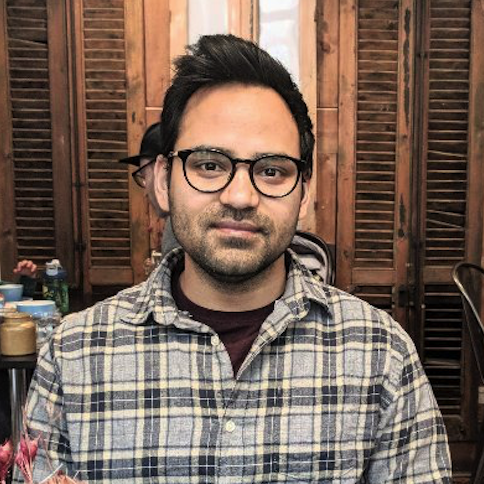

Hi, I am Pooran Dewari

Pooran Dewari

Postdoc at University of Edinburgh

Trained as a cancer molecular biologist and bioinformatician, I have collaborated with leading biotech companies (IDT, Twist Bioscience, Sphere Fluidics) to develop CRISPR genome-editing pipelines for efficient and scalable tagging of genes in mammalian stem cells. Using ChIP-seq and RNA-seq approaches, I am currently investigating how neurodevelopmental transcription factors fuel proliferation of brain tumour stem cells. Keen on transitioning into bioinformatics job and work in team environment wherein I can apply my research skills and interests.

Collaboration
Problem solving
Communication
Cancer Biology
CRISPR
Bioinformatics

Skills

Bioinformatics
Bioinformatics

ChIP-seq and RNA-seq: Data analysis and visualisation using suite of command-line tools and R packages (ChIPseeker, clusterProfiler)

Programming languages

R: Data wrangling and tidying, data visualisation using ggplot2. Python: Intermediate-level

Proteomics analysis
Proteomics analysis

analysis of RIME and ChIP-SICAP MS data using R packages.

Other software programs

LaTeX, Snapgene, ImageJ, CellProfiler

NGS sample preparation

Perform ChIP pull-down, extract RNA, and prepare barcoded libraries for sequencing.

CRISPR genome-editing

Epitope and fluorescent reporter tagging in mammalian stem cells, gene knock-out using Cas9 RNP approach

Protein partners
Protein partners

Identify protein partners using RIME and native IP pull-down.

Other techniques
Other techniques

Fluorescence microscopy, Gibson and gateway cloning, real-time qPCR, DNA and RNA extraction, Western Blotting


Experiences

1
Postdoc
University of Edinburgh, UK

Dec 2014 - Present,

Responsibilities:
  • Optimise ChIP using tumour-derived glioma stem cells (GSCs) and prepare libraries for NGS
  • Analyse ChIP-seq datasets and identify genomic targets of key neurodevelopmental TFs
  • Compute overlap between TFs binding to chromatin and their intersection with evolutionary conservation (phyloP score) and gene expression (RNA-seq)
  • Develop RNP-based CRISPR protocol and bioinformatics tool for scalable epitope knock-in in stem cells
  • Optimise method to identify protein partners of TFs in GSCs using RIME technology
  • Optimise and scale-up mCherry reporter knock-in in GSCs using CRISPR RNP approach (in collaboration with Twist Bioscience and Sphere Fluidics biotech companies)

Centre for Cellular & Molecular Biology, India

August 2006 - Nov 2014,

Postdoc

April 2013 - Nov 2014

  • Set up zebrafish behavioural assays
  • Model zebrafish to study chronic alcoholism
  • Optimise ChIP using zebrafish brain tissue
PhD

August 2006 - April 2013

  • Purify core components of RNA polymerase III machinery (histones, chaperone Asf1, RNA polymerase III enzyme, yeast transcription factor C)
  • Optimise methods to assemble chromatin in vitro
  • Map Asf1 genome-wide localisation using ChIP-seq
2

3
MSc Biochemistry & Molecular Biology
GB Pant University of Agriculture and Technology, India

July 2004 - July 2006,

Responsibilities:
  • Liase with local farmers to collect bamboo samples from frields
  • Extract DNA and proteins from bamboo leaves
  • Develop novel protein and DNA-based markers for identifcation of bamboo cultivars

Publications

Google Forums Round Up- First Impressions of NgAgo
Blogger 2016

The newest genome engineer sharing the stage with much-lauded CRISPR-Cas9 is DNA-guided endonuclease NgAgo! We’ll discuss how NgAgo is faring with users in a minute, but, to start, let’s review why NgAgo is in the spotlight and take a moment to remember that NgAgo has only been available for genome editing for a few months.

Details
Hassle-free 96-well Format Epitope Tagging
Blogger 2018

We developed a hassle-free, highly efficient Cas9 protein-based method for epitope tagging in mammalian stem cells. For easy scalability to the 96-well format, we developed a “TAG-IN” bioinformatics tool for guide RNA and donor DNA design, and implemented our optimised protocols into a medium-throughput pipeline for epitope tagging.

Details
Scalable CRISPR pipeline for epitope tagging
First author 2018

Dewari PS, Southgate B, Mccarten K, Monogarov G, O’Duibhir E, Quinn N, Tyrer A, Leitner MC, Plumb C, Kalantzaki M et al. An efficient and scalable pipeline for epitope tagging in mammalian stem cells using Cas9 ribonucleoprotein. Elife 7

Details
CRISPR genome-editing human stem cells
Second author 2017

Bressan RB, Dewari PS, Kalantzaki M, Gangoso E, Matjusaitis M et al. Efficient CRISPR/Cas9-assisted gene targeting enables rapid and precise genetic manipulation of mammalian neural stem cells. Development 144 : 635-648

Details
Zebrafish as chronic alcoholism model
First author 2016

Dewari PS, Ajani F, Kushawah G, Kumar DS, Mishra RK. Reversible loss of reproductive fitness in zebrafish on chronic alcohol exposure. Alcohol 50 : 83-89

Details
ChIP-seq of Asf1 and its role in Pol III regulation
First author 2014

Dewari PS, Bhargava P. Genome-wide mapping of yeast histone chaperone anti-silencing function 1 reveals its role in condensin binding with chromatin. PLoS One 9 : e108652

Details
Transciptional regulation of tRNA genes
Second author 2011

Mahapatra S, Dewari PS, Bhardwaj A, Bhargava P. Yeast H2A.Z, FACT complex and RSC regulate transcription of tRNA gene through differential dynamics of flanking nucleosomes. Nucleic Acids Res 39 : 4023-4034

Details

Recent Posts

Achievements

Invited Talks

University Teaching Fellow

Top rank holder

Fellowship